Summary:
Following Lion Studios’ acquisition of WORDLE! on iOS from a solo developer during the 2021/2002 viral surge happening on Twitter, the iOS product experienced explosive organic growth but lacked depth, features, and monetization. Our team was tasked with transforming a simple, content light experience into a scalable live service, while preserving the core simplicity that made the game successful.
The Problem:
At the time of acquisition, WORDLE! was benefiting from massive organic installs driven by brand recognition and cultural momentum. However:
The game had minimal features
No meaningful progression or retention systems
Very limited monetization
A user base scaling faster than the product itself
Despite extremely high download volume, the product was not capturing long term value or revenue, creating a narrow window to act before organic interest declined.
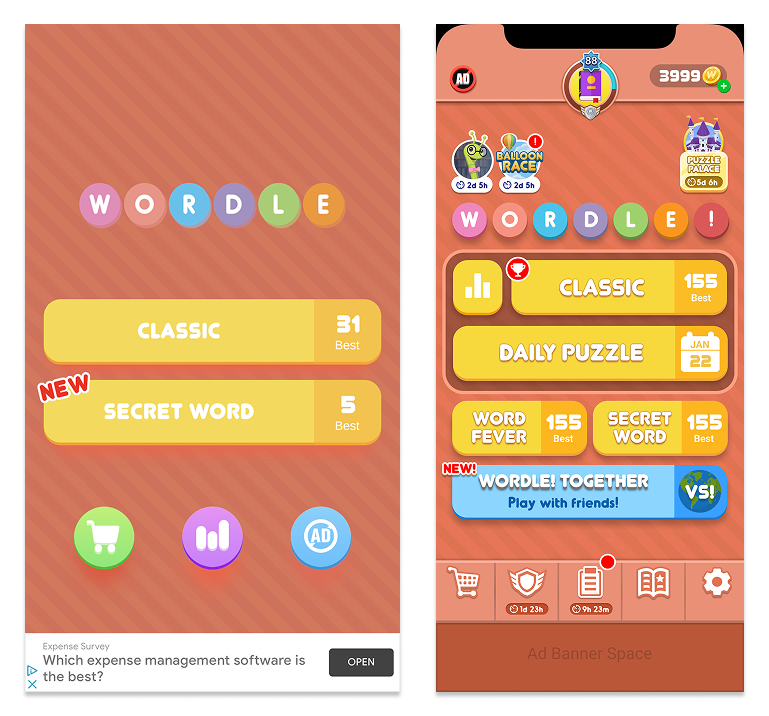
Sample of the original main menu design (left) with minimal features, versus the current day main menu design (right) with maximized feature set
Constraints & Challenges:
This project came with several high-risk constraints:
Viral audience expectations: Any change risked alienating players who wanted the “pure Wordle” experience
Live product at massive scale: ~1M DAU during peak periods
Speed: Features needed to ship quickly to capitalize on momentum
Monetization sensitivity: Revenue needed to increase without feeling exploitative or disruptive
Legacy foundation: The original product was not built with live ops or systems in mind
These constraints influenced both our UX and UI decisions.
My Role & Responsibilities:
As the Lead UI/UX Designer, I:
Helped evolve the product from a single mode game into a multi-feature ecosystem
Designed scalable UI systems to support live ops content
Partnered closely with product, content design, and engineering to balance player experience with monetization goals
Led UX and UI for major feature additions, including:
1. Daily Puzzles
2. Leaderboards & Tournaments
3. WORDLE! Together (PvP mode)
While we worked on many other features during my time on WORDLE!, below we will review how we handled these 3 main features that helped bring continued success to the product.
UI Snapshot #1 Daily Puzzle, Driving Habit Formation at Scale:
Goal:
Increase daily engagement without adding complexity or friction.
UX Challenges:
Must feel fresh but familiar
Must respect casual players’ time
Cannot fragment the Classic WORDLE! loop
Design Decisions:
Clear daily entry point surfaced on the home screen below the Classic mode
Familiar daily calendar UI to keep cognitive load low
Feedback states designed to reinforce completion (win or loss)
Trophy System to encourage completion of days/ months
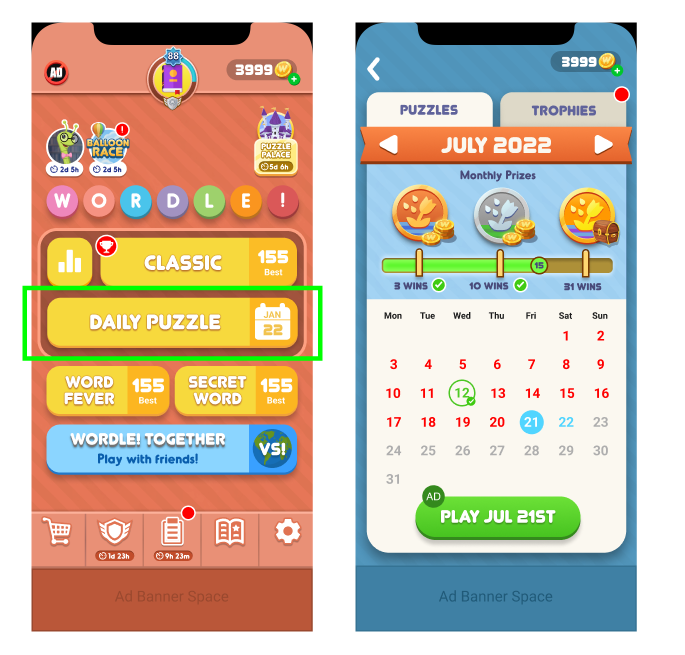
Daily Puzzles entry highlighted in green and the Daily Puzzle page.
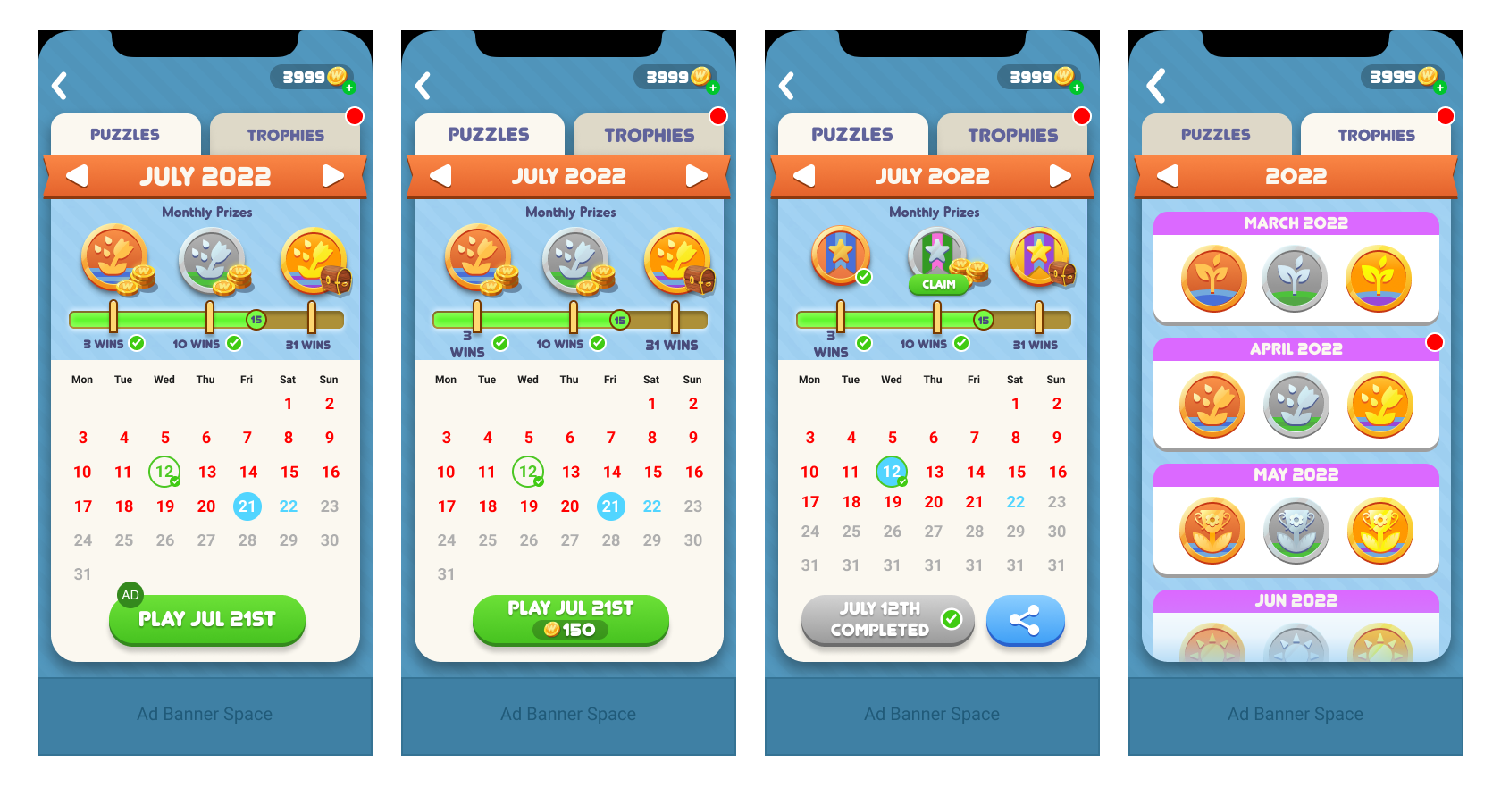
Daily Puzzle Screens: Play for Ad or for coin states, completed state, and trophy page state
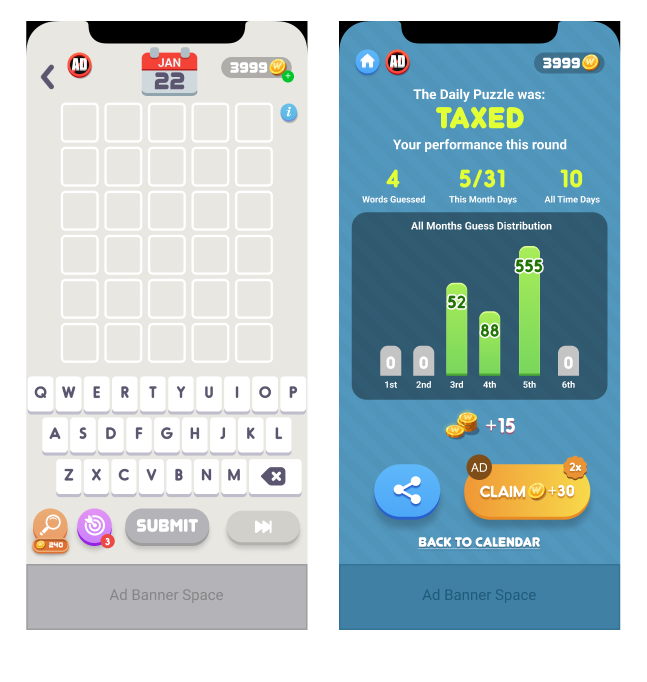
Daily Puzzle play screen and win screen, maintaining the familiarity of the Classic screens
Result:
Daily Puzzle became a reliable retention anchor, supporting consistent daily play across a massive user base.
UI Snapshot #2 Leaderboards and Tournaments:
Goal:
Create long-term motivation and friendly competition for returning players.
UX Challenges:
Competitive systems risk intimidating casual players
Needed to scale across wide skill ranges
Had to coexist with the Classic game mode
Design Decisions:
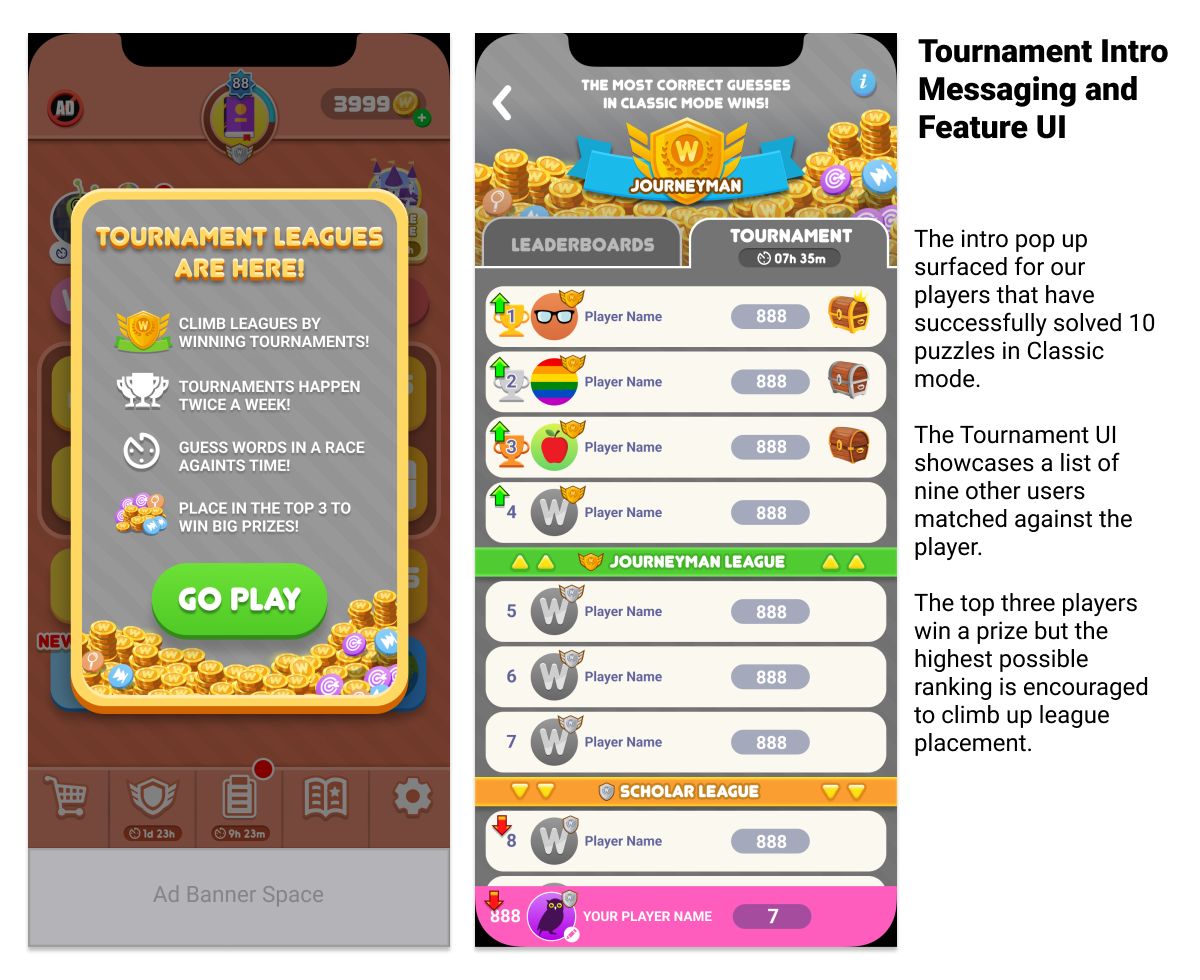
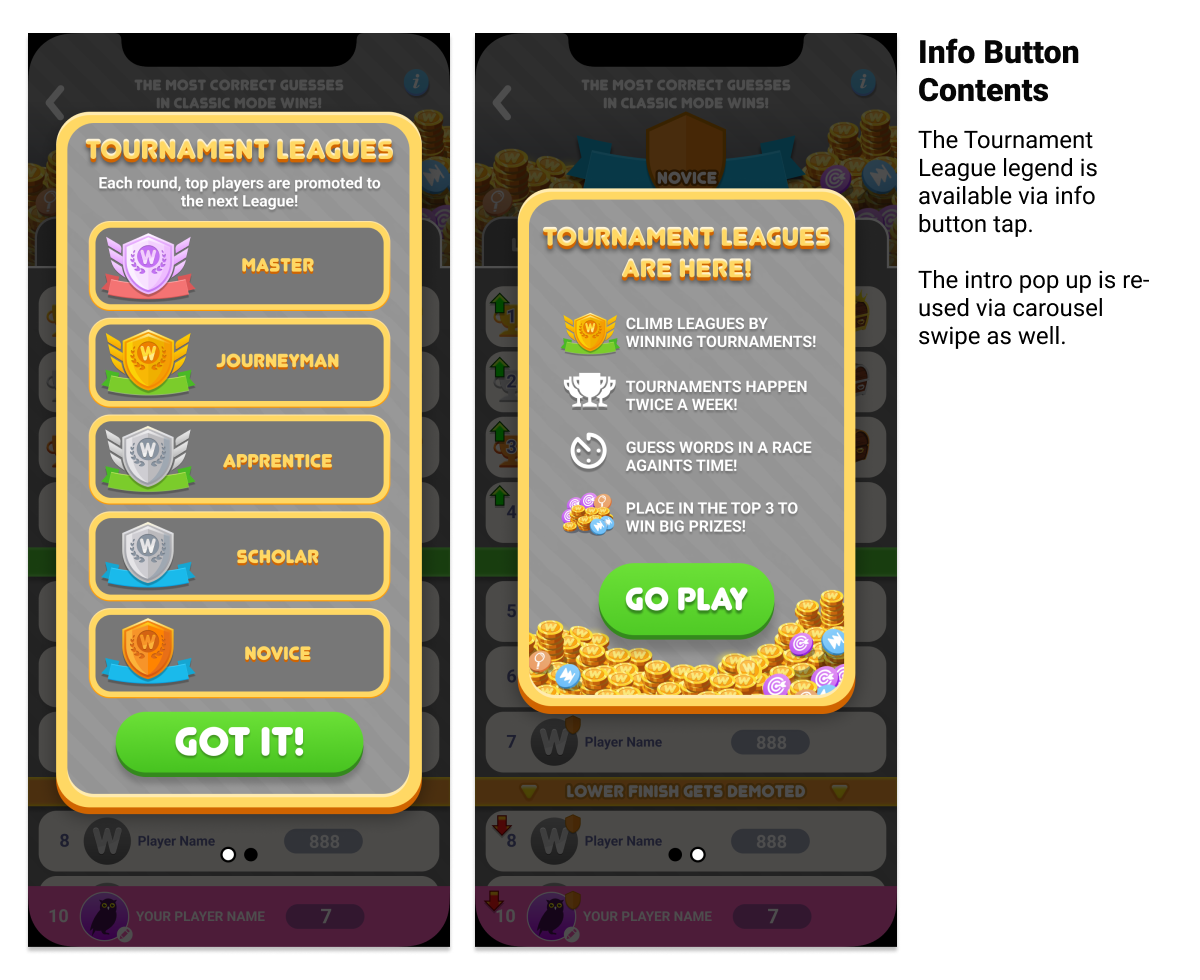
Simple League tiers with clear visual progression
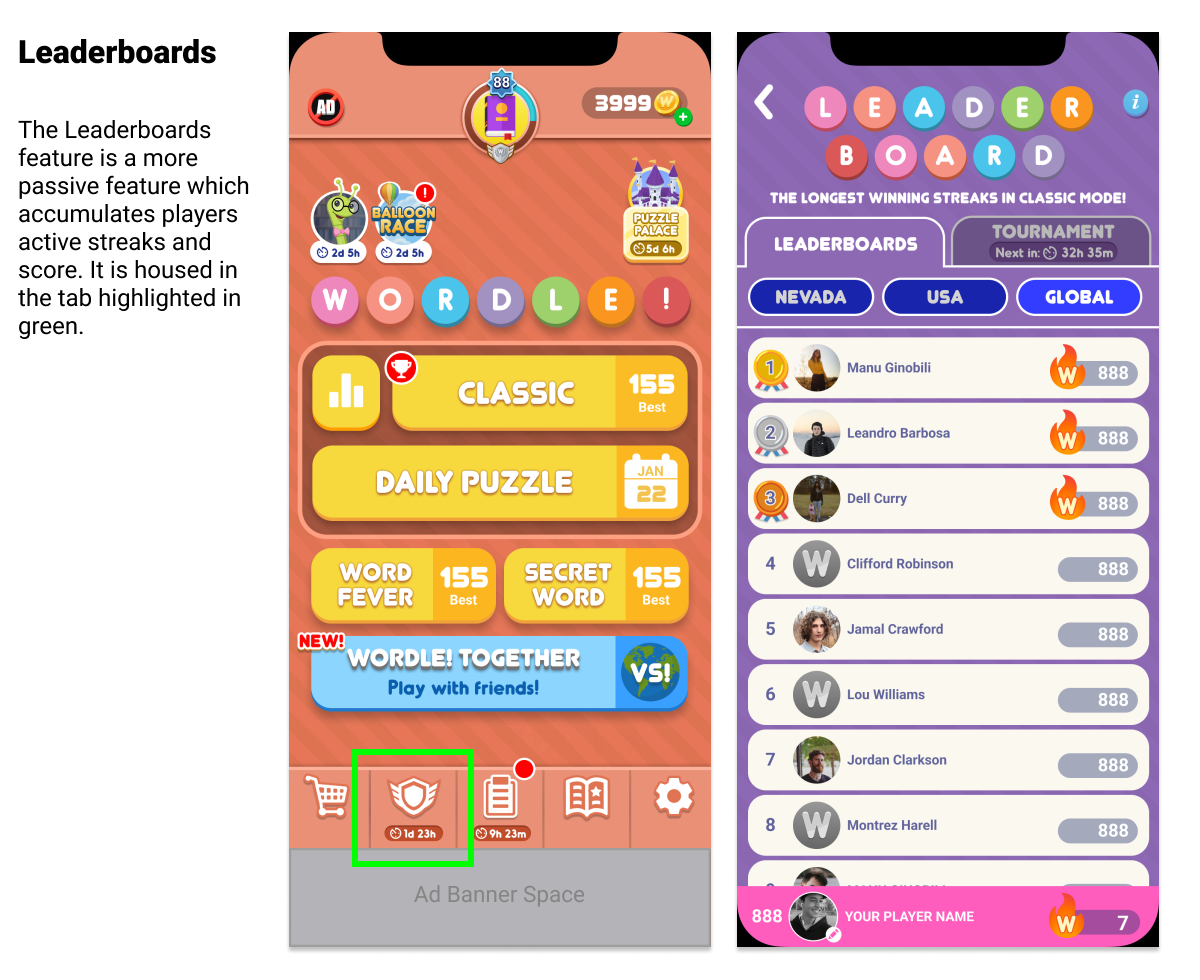
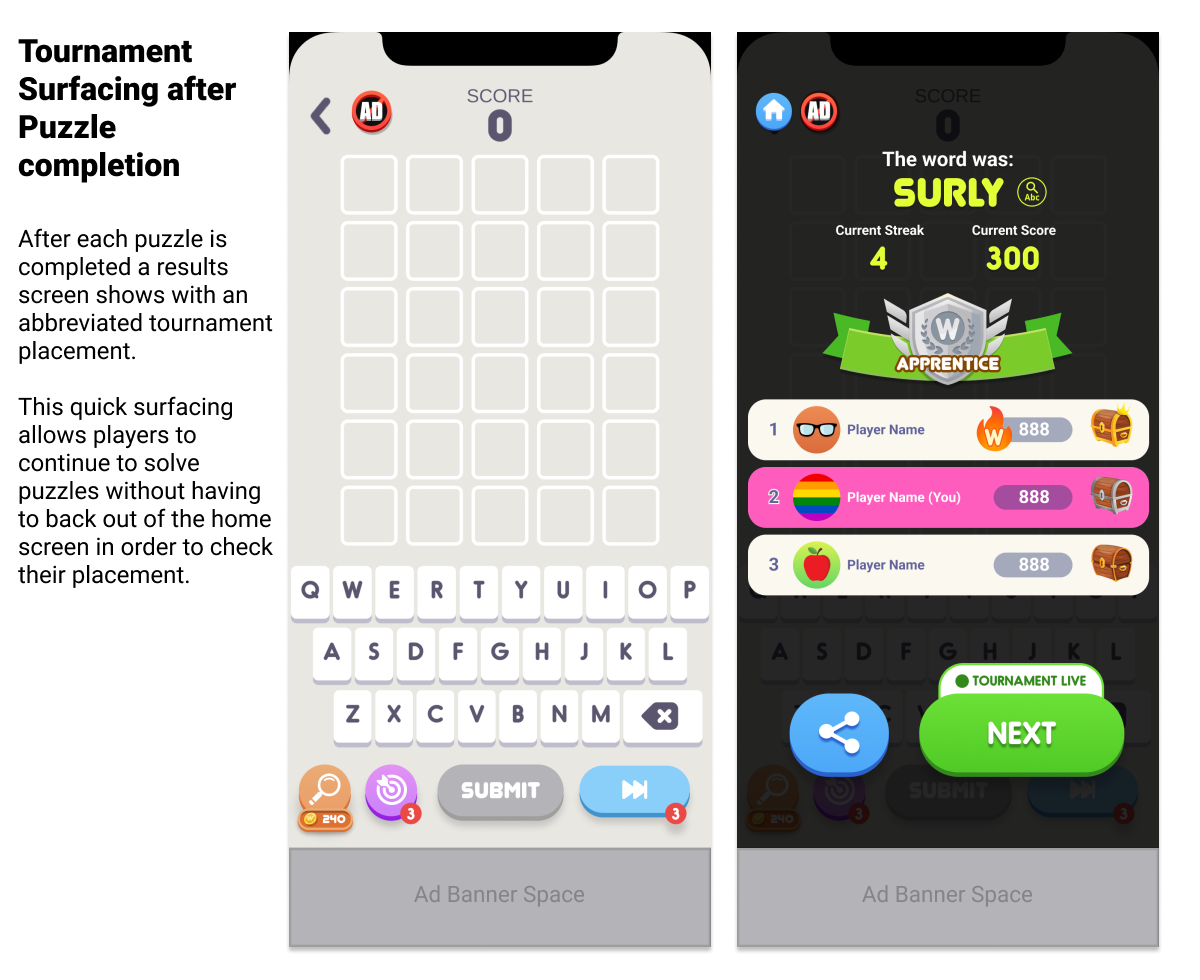
Tournaments pool a smaller group of players to compete in a shorter time frame while Leaderboard includes global players active streak and score ranking for the lifetime of the product
Opt-in and passive visibility, players engage when ready
Result:
Leaderboards and Tournament added a clear sense of progression and status, encouraging repeat play without disrupting the core WORDLE! experience.
UI Snapshot #3 “WORDLE! Together” (PvP) Designing Competitive Play for Short Sessions:
Goal:
Introduce replayability and virality with async competition while preserving WORDLE!’s lightweight feel.
UX Challenges:
Flexibility for short sessions, while maintaining Classic play familiarity
Competitive pressure without frustration
Social play without toxicity
Design Decisions:
Players choice between inviting a friend or random matchmaking
Clear match progression markers for “Your turn” & “Their turn” async states
Maintain classic familiarity for gameplay and watch modes
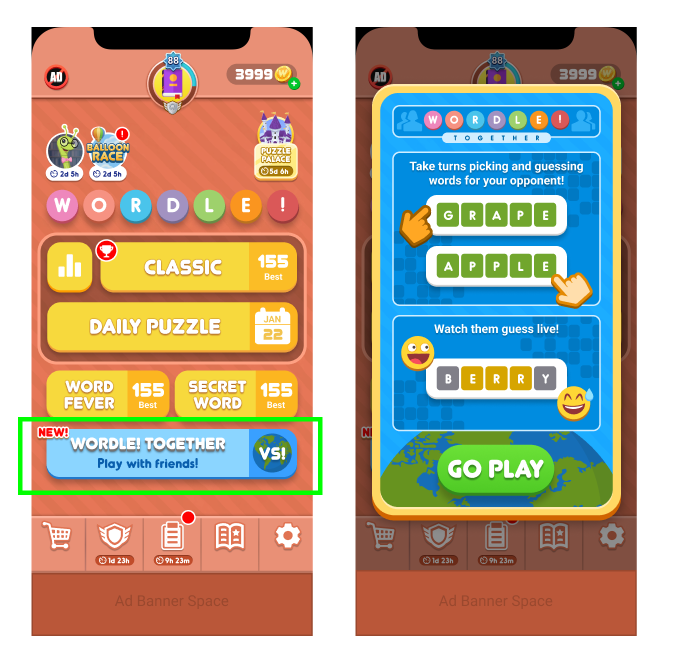
The entry location from the home screen and the intro pop up.
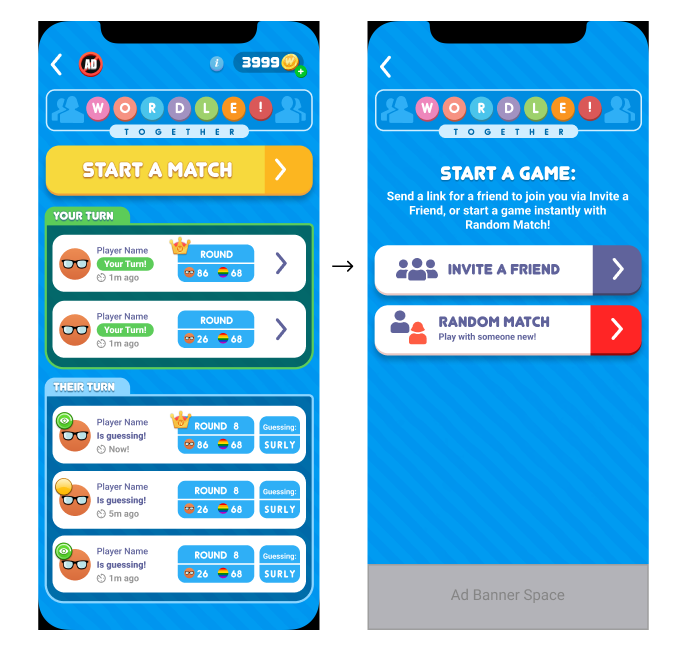
The Together Home screen houses a “Start A Match” CTA, “Your Turn” cells and “Their Turn” cells.
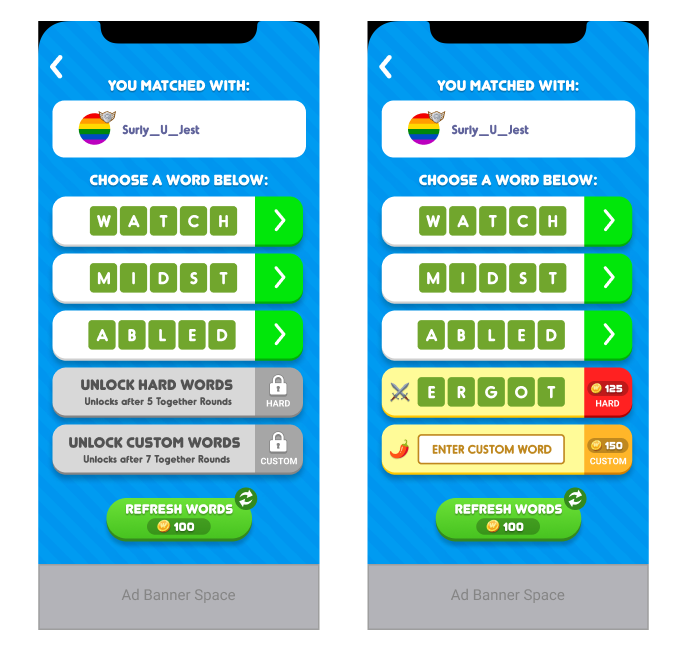
Choosing a word for your opponent. Players can choose from a moderate to high difficulty word, or they could enter their own custom 5 letter word.
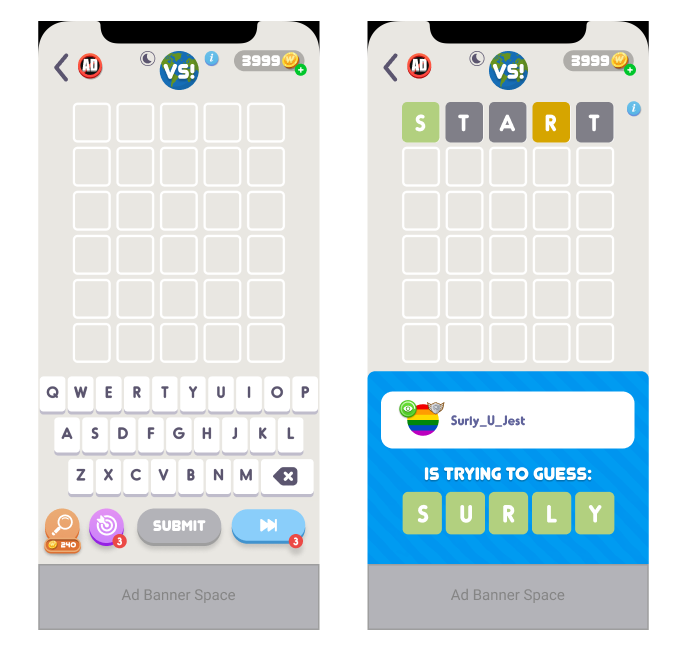
“Your turn” and “Their” turn watch mode.
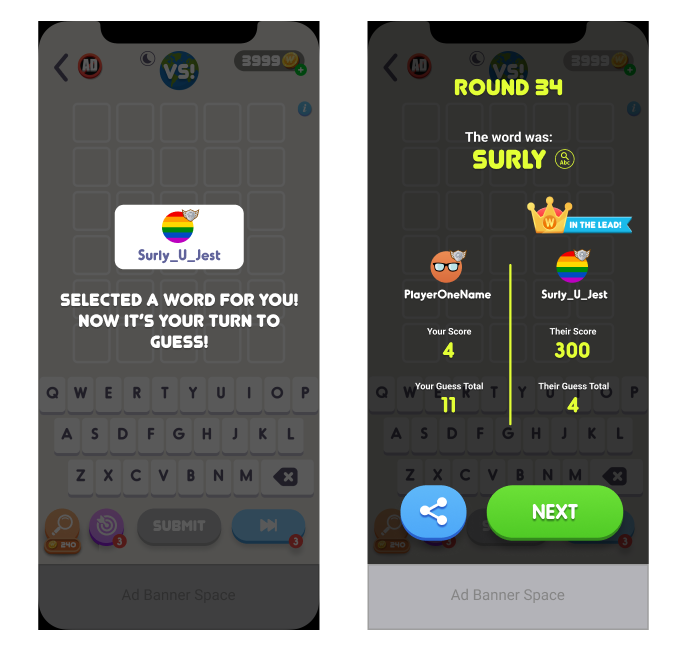
The pre game transition screen showing when your opponent has chosen a word for you and the match results screen. Players can continue to play against each other and tally their scores.
Result:
“WORDLE! Together” features added excitement and replayability, supporting both engagement and monetization during peak traffic periods.
Outcomes & Impact:
During peak performance periods:
DAU maintained ~1 million users
The product grew and maintained successful in app purchase revenue and ad revenue metrics
Multiple new modes and systems shipped successfully
The game transitioned from a viral moment into a monetized live service
The work demonstrated how strong UX and gameplay system design can unlock revenue at scale without compromising core gameplay.
Reflection:
Working on WORDLE! during a period of rapid growth reinforced how important it is to protect the original player expectation while expanding a product at scale. Adding features like Daily Puzzles, Leaderboards/Tournaments, and WORDLE! Together required designing systems that could support millions of players without introducing unnecessary complexity or friction. The project also reaffirmed the teams belief that monetization works best when it is thoughtfully integrated into the core experience, allowing the product to grow commercially while preserving the simplicity and enjoyment that made it successful.